
About VentureEdge
Built for solo founders carrying decisions that usually belong to a wider leadership team.
VentureEdge was created to support founders at the stage where the company is serious enough to need structure, but not yet large enough to have a full senior team around it.
Many early-stage founders are not short of ambition, ideas or effort. What they often lack is a clear working structure for making decisions, building the right assets and reviewing what is actually happening in the business.
VentureEdge gives that work a practical system.
The focus is not motivation, theory or generic advice. The focus is helping founders think clearly, decide carefully, build what is missing and move forward with stronger evidence.
Why VentureEdge Exists
A new kind of company is becoming possible.
AI, automation, contractors and specialist external support mean that one person can now build with capabilities that once required a much larger team.
For experienced professionals, this creates a new path. Years of expertise, industry knowledge, relationships or an idea can become the foundation of something they own.
That does not mean every company should remain a one-person company. It means one person can increasingly be the starting point of a much more capable business.
But having access to more technology does not remove the difficult decisions.
What should you build?
Who will pay for it?
How should it be positioned?
What should you do yourself?
What can AI or automation handle?
When should you use a specialist or contractor?
What needs to be tested before you commit further?
VentureEdge exists to help founders work through those questions and turn the answers into practical progress.
You may be starting alongside a job, turning professional expertise into a company, or already building as a solo founder.
The principle is the same:
You can build independently without building alone.
The VentureEdge Approach
The VentureEdge Approach
VentureEdge is built around a simple belief: founders do not just need more answers. They need a better way to work through important decisions.
Every engagement is structured around four movements:
Map
Understand the company’s current reality, including the offer, customer, evidence, constraints, assumptions and unresolved decisions.
Decide
Turn uncertainty into clear choices, with reasoning, trade-offs, ownership and next steps.
Build
Create the practical assets, systems, documents or workstreams needed to support the decision.
Verify
Review what is actually happening through evidence, feedback, behaviour and progress.
This approach keeps the work grounded. It connects strategy to execution and stops important decisions from staying vague for too long.
About Douglas
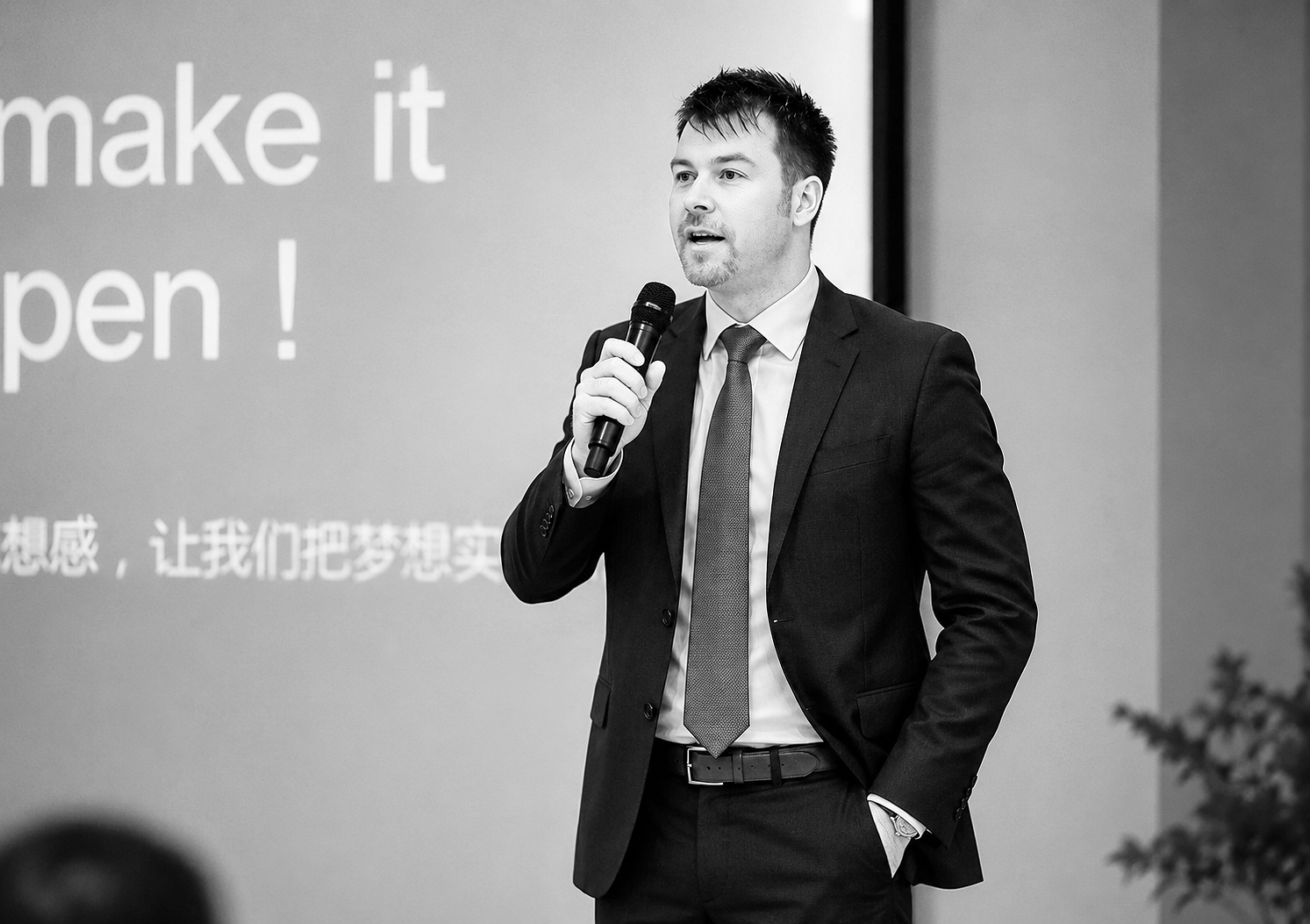
About Me
I’m Douglas Seabrooke — founder of VentureEdge.
I’ve always been drawn to entrepreneurship. Not just the outcomes, but the intent behind it — people choosing to build something new, take responsibility, and try to change the world in their own way.
I genuinely enjoy working with people at the early stages of building, when ideas are forming and possibilities are wide open. VentureEdge grew out of that passion — a way for me to support entrepreneurs in a thoughtful, practical, and collaborative way.
If you care about what you’re building and want someone supportive alongside you, I’m always happy to have a conversation.
My Mission
My mission is to help more people turn experience, expertise and ideas into something they own — and to help founders build stronger companies without having to make every important decision alone.
VentureEdge exists to make that process more structured, practical and commercially grounded.
A thought I often come back to
When people start building something, they usually focus on the known knowns — what they’re excited about and what they believe they understand. They’re also aware of the known unknowns — the obvious questions they expect to figure out along the way.
What tends to shape the journey most, though, are the unknown unknowns — the things no one realises they should be thinking about yet. When those surface late, they feel like bad luck. When they surface early, they feel like clarity.
A big part of my work is helping bring those questions forward before commitment, while it’s still cheap to adjust.
Deal Partner at Boardy Ventures
I’m a Deal Partner at Boardy Ventures, an AI-led venture fund built to transform how early-stage fundraising works.
In a short time, Boardy has become one of the most active connectors in the startup ecosystem—engaging with over 8,000 founders (collectively raising $20B+) and 1,000+ investors managing more than $1T in capital.
In partnership with AngelList, Boardy Ventures is on a mission to meet every founder preparing to raise, connect them with the right investors, and back the most promising companies.
If you’re planning a fundraise and want help finding the right investors, feel free to get in touch.

How VentureEdge Works With Founders
VentureEdge works with people at two closely connected stages.
You may already be a solo founder building a company and need more structure around the decisions, assets and priorities shaping the next stage.
Or you may be an experienced professional considering whether your expertise, relationships or an idea could become a viable company of your own.
The relationship is practical and decision-led. We clarify what matters, work through the important choices, build what is missing and test assumptions against real evidence.
The exact work depends on the situation rather than following a generic programme.
The starting questions are usually simple:
What are you trying to build?
What is currently unclear?
What needs to be decided, built or tested?
What evidence would make the next step stronger?
Work With VentureEdge
You may already be building as a solo founder, or you may be considering whether your expertise or an idea could become a company of your own.
If you need help working through one important question, start with a Decision Sprint.
If you are ready to spend the next 90 days structuring, building and testing the company, the Founder Office may be the right fit.
The first step is simply to understand where you are now, what you are trying to build and what kind of support would be most useful.